

Co-Living Isn’t What You Think It Is
Co-living is often sold as a smarter way to share space. But the really interesting movement is about something much bigger: changing the way we think about home, community and the land we live on.
Forget the glossy apartment with a communal kitchen and a monthly membership.
That is shared accommodation.
Co-living has the potential to be something far more ambitious.
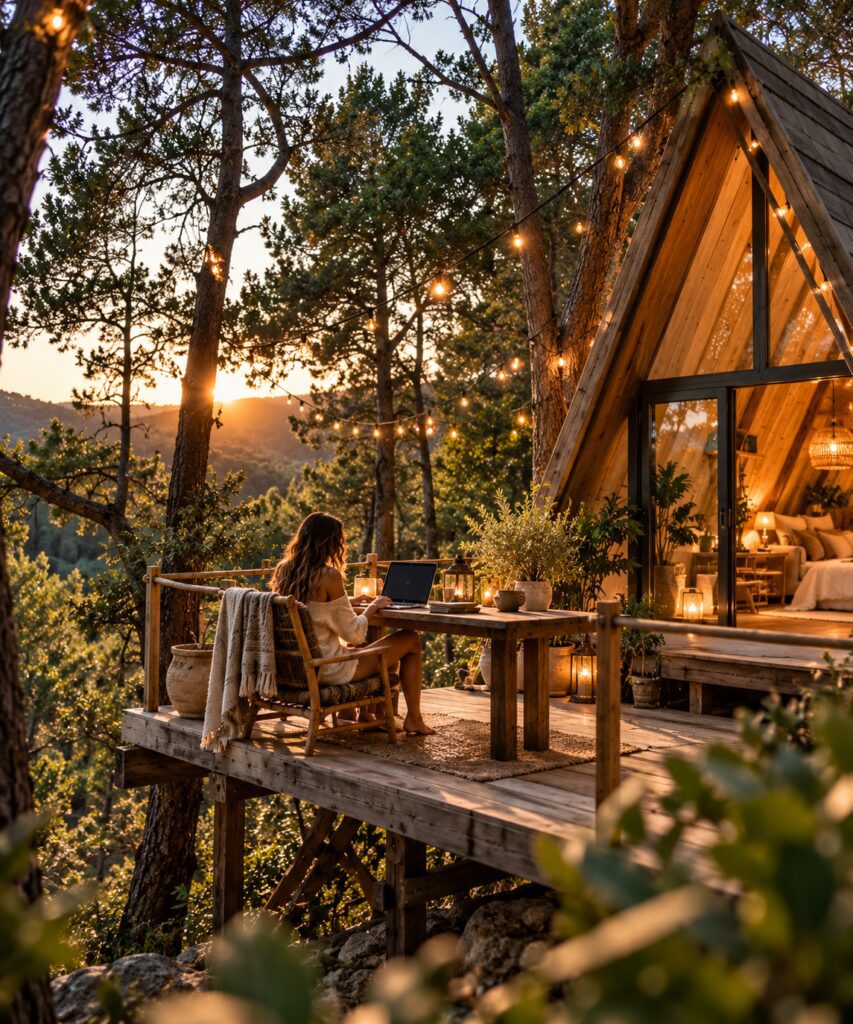
We built homes. We forgot to build community.
The traditional housing model is remarkably good at creating privacy.
Your house.
Your garden.
Your car.
Your washing machine.
Your lawn.
Everything neatly separated.
It gives us independence, but it can also create isolation, duplication and an extraordinary amount of wasted space and resources.
The emerging co-living movement asks a different question:
What if we could have privacy without living in isolation?
Your own home.
Shared spaces.
Shared resources.
Shared experiences.
A community that exists because people choose to participate in it, not because they happen to live next door.
That is intentional community living.
And it is very different from having housemates.
Then take it one step further
The really interesting future isn’t simply co-living.
It is regenerative living.
Because a genuinely sustainable community shouldn’t stop at solar panels and recycling bins.
It should ask what the entire ecosystem could become.
Can land produce food?
Can biodiversity increase?
Can water be managed intelligently?
Can renewable energy become part of the infrastructure?
Can people share workspaces, tools, knowledge and skills?
Can a community create economic opportunity as well as somewhere to live?
And most importantly:
Can the land be healthier because people are living there?
That is the shift from sustainable to regenerative.
Not simply doing less damage.
Actively creating something better.
Why Spain?
Spain is becoming an increasingly interesting place to explore this conversation.
People are looking beyond traditional urban living. Remote workers, entrepreneurs, families and creatives are reconsidering where and how, they want to live.
The opportunity isn’t to build another development and put eco on the marketing.
It is to create regenerative communities in Spain where nature, people, work and everyday life are designed to function together.
Where the garden isn’t decoration.
Where community isn’t an occasional barbecue.
Where sustainability isn’t an add-on.
It is the operating model.

Maybe the new luxury isn’t more space
We’ve spent decades being told that success means owning more.
More house.
More land.
More stuff.
But perhaps the next generation will value something different.
Privacy without isolation.
Independence without disconnection.
Nature without giving up modern life.
Community without giving up yourself.
That is where co-living gets interesting.
Because perhaps the future of housing isn’t about building more places to live.
Perhaps it is about creating better places to belong.
And that is a much bigger idea than co-living.
That is regeneration.
Gold Button Collective Regeneration is exploring what happens when we design communities around that idea from the beginning.